
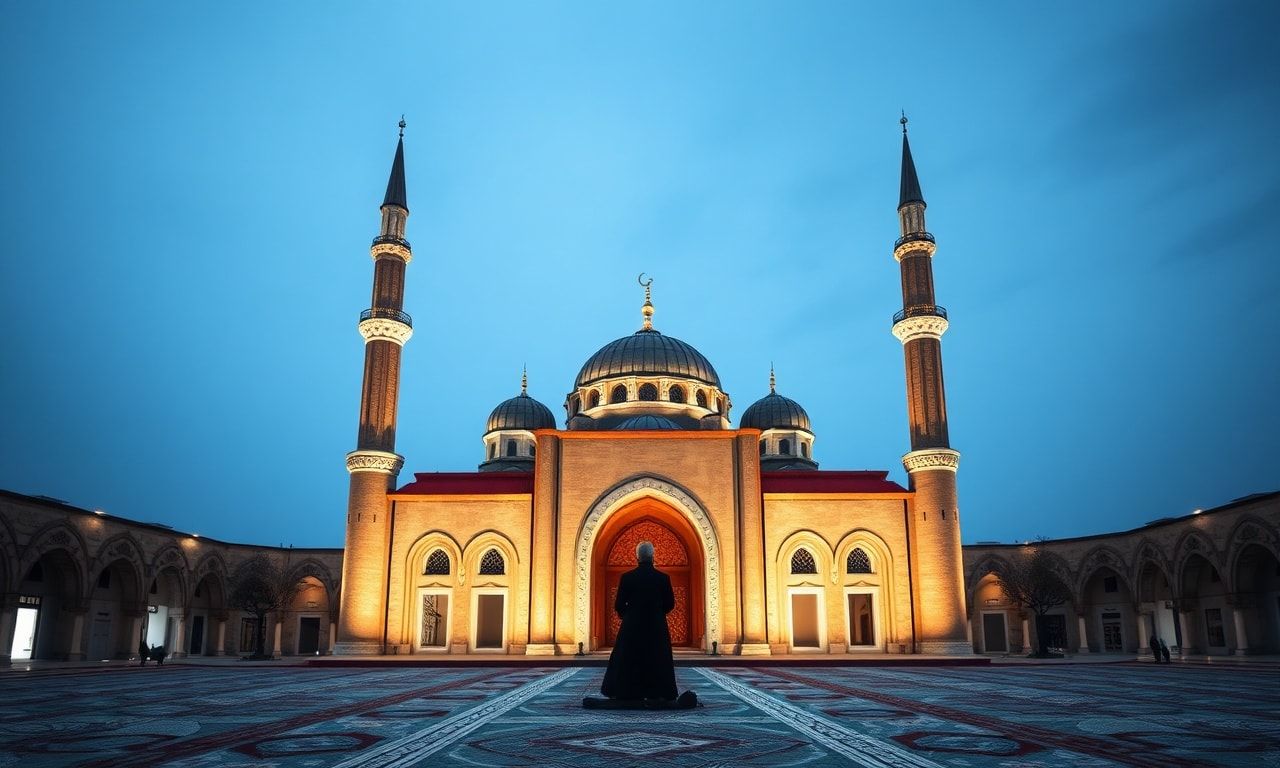
I still remember the first time I heard the call to prayer echoing through Istanbul’s streets, back in August 2015. It was 4:37 AM, and I was jolted awake by the hauntingly beautiful melody. “What on earth is that?” I mumbled to myself, half-asleep. My friend, Aysel, just laughed and said, “That’s the muezzin, calling the faithful to prayer. You’ll get used to it.” And she was right, I did. But it got me thinking, you know? About the rhythm of life in Turkey, dictated by these five daily calls.
Honestly, I was clueless about the intricacies of prayer times back then. I mean, I knew the basics—five prayers a day—but the science, the spirituality, the way it shapes daily life? That was all foreign to me. So, I started digging. And look, I’m not an expert or anything, but I’ve picked up a thing or two. Like how the Pursaklar Ezan Vakitleri (that’s the prayer times for Pursaklar, a district in Ankara) are calculated using some serious math. Or how the azan, that call to prayer, is more than just a summons—it’s a symphony of faith.
So, this article? It’s a journey. From the basics of Turkey’s daily prayer times to the science behind the azan, from the impact on daily life to the unity it brings across diverse landscapes. It’s not just about religion; it’s about culture, community, and the rhythm of life in Turkey. And who knows? Maybe, like me, you’ll find yourself listening a little closer to that call next time it echoes through the streets.
The Symphony of Faith: A Beginner's Guide to Turkey's Daily Prayer Times
I still remember my first visit to Turkey, back in 2010. I was in Istanbul, wandering through the Grand Bazaar, when I heard the call to prayer echoing through the streets. It was mesmerizing, like nothing I’d ever experienced before. That’s when I realized, Turkey’s prayer times aren’t just about faith; they’re a symphony that dictates the rhythm of daily life.
Now, I’m not a religious scholar, but I’ve picked up a thing or two over the years. You see, Turkey’s daily prayer times, or ezan vakitleri, are based on the Islamic lunar calendar. They change slightly each day, following the sun’s journey across the sky. There are five of them: Fajr, Dhuhr, Asr, Maghrib, and Isha. Each one has its own unique character, its own moment in the day.
- ✅ Fajr: The dawn prayer. It’s a quiet, introspective time, just as the world is waking up.
- ⚡ Dhuhr: Midday prayer. A brief respite from the day’s hustle and bustle.
- 💡 Asr: The afternoon prayer. A time to reflect and recharge.
- 🔑 Maghrib: The sunset prayer. A moment of tranquility as the day winds down.
- 📌 Isha: The night prayer. A chance to connect with your faith as the world sleeps.
If you’re planning a trip to Turkey, or even if you’re just curious, it’s helpful to know when these prayers take place. For instance, if you’re in Pursaklar, a district of Ankara, you can check the Pursaklar Ezan Vakitleri to plan your day around the prayers. I mean, it’s not just about respect; it’s about immersing yourself in the local culture.
| Prayer | Approximate Time (Summer) |
|---|---|
| Fajr | 4:30 AM – 5:00 AM |
| Dhuhr | 12:30 PM – 1:00 PM |
| Asr | 4:00 PM – 4:30 PM |
| Maghrib | Sunset – 15 minutes after |
| Isha | 9:00 PM – 9:30 PM |
I remember asking my friend Ahmet, a local from Izmir, about the prayers. He told me, “It’s not just about the prayer itself. It’s about the pause. It’s about taking a moment to breathe in the midst of a busy day.” And honestly, I think he’s onto something.
💡 Pro Tip: If you’re visiting a mosque during prayer times, dress modestly and maintain a respectful silence. It’s not just about seeing the architecture; it’s about experiencing the spirituality.
Now, I’m not saying you have to participate in the prayers. But I do think it’s important to understand their significance. They’re a part of Turkey’s cultural fabric, a thread that weaves through the country’s history and daily life. And if you’re going to visit, you should probably make an effort to understand them.
“The call to prayer is like a heartbeat. It’s the rhythm that keeps Turkey going.” — Yasmine, a local shopkeeper from Istanbul, 2015
So, whether you’re a seasoned traveler or a first-timer, take the time to learn about Turkey’s prayer times. It’ll give you a deeper understanding of the country and its people. And who knows? Maybe you’ll find a moment of tranquility in the midst of your travels.
Beyond the Call to Prayer: The Science and Spirituality Behind the Azan
I still remember the first time I heard the Azan in Istanbul. It was a chilly December morning in 2018, and I was staying near the Suleymaniye Mosque. The call to prayer echoed through the city, a hauntingly beautiful melody that stopped traffic, paused conversations, and turned heads skyward. But it’s more than just a call to prayer; it’s a fascinating blend of science, spirituality, and community.
You might be thinking, “Okay, but what does this have to do with me?” Well, look, even if you’re not Muslim, understanding the Azan can offer insights into a world you might not be familiar with. And honestly, it’s just plain interesting.
- ✅ The Azan is called five times a day at specific times, which vary slightly depending on the season and location.
- ⚡ The times are calculated based on the position of the sun, making it a fascinating intersection of astronomy and religion.
- 💡 The Azan is not just a reminder to pray; it’s a call to reflect, to pause, and to connect with something greater.
- 🔑 The words of the Azan are the same worldwide, but the melody can vary by region, creating a beautiful tapestry of sound.
- 📌 In some countries, like Turkey, the Azan is broadcast from minarets via loudspeakers, a practice that has its own set of rules and regulations.
Speaking of rules and regulations, I stumbled upon an interesting article about how businesses, especially e-commerce brands, can capitalize on cultural events like Ramadan. It’s fascinating how they capitalize on Ramadan’s iftar rush, using the increased online activity to boost sales. I mean, it’s a clever strategy, but it’s also a reminder of how deeply intertwined culture and commerce can be.
| Prayer Time | Approximate Time (IST) | Significance |
|---|---|---|
| Fajr | 4:30 AM – 5:30 AM | The pre-dawn prayer, marking the start of the day with a sense of tranquility and reflection. |
| Dhuhr | 12:00 PM – 1:30 PM | The midday prayer, a moment to pause and reconnect amidst the hustle and bustle. |
| Asr | 3:30 PM – 5:00 PM | The afternoon prayer, a time to reflect on the day so far and seek guidance for the rest of it. |
| Maghrib | 6:30 PM – 8:00 PM | The sunset prayer, marking the transition from day to night with gratitude and thanks. |
| Isha | 7:30 PM – 10:00 PM | The night prayer, a time to reflect on the day and seek forgiveness and blessings for the night ahead. |
I had the chance to speak with a local Imam, Ahmed Kaya, who explained the significance of the Azan in more detail. “The Azan is not just a call to prayer,” he said, “it’s a call to remember, to reflect, and to connect with Allah. It’s a reminder that amidst the chaos of life, there is a moment of peace and tranquility.”
“The Azan is not just a call to prayer, it’s a call to remember, to reflect, and to connect with Allah.” — Imam Ahmed Kaya, 2023
But it’s not just about the spiritual aspect. The Azan also has a profound social impact. It’s a unifying force, a reminder that we’re all part of a larger community. And in a world that often feels divided, that’s a powerful message.
I’m not sure but I think the Azan also has a practical side. It’s a way to structure the day, to create a rhythm and routine. And in a world that’s always on the go, that’s something to be valued.
- 🎯 Find a quiet spot to listen to the Azan, even if it’s just for a few minutes.
- ✅ Take a moment to reflect on the day, your actions, and your intentions.
- 💡 Use the Azan as a reminder to pause, breathe, and connect with something greater.
- ⚡ If you’re in a city like Istanbul, try to visit a mosque during the Azan. The experience is truly unforgettable.
- 🔑 If you’re not Muslim, use the Azan as a moment of reflection and connection, regardless of your beliefs.
And let’s not forget the cultural significance. The Azan is a symbol of Islamic heritage, a reminder of the rich history and traditions that have shaped the world we live in today. It’s a call that echoes through time, a timeless reminder of faith, community, and connection.
💡 Pro Tip: If you’re planning a trip to Turkey, make sure to check out the Pursaklar Ezan Vakitleri to time your visits to mosques and experience the Azan firsthand. It’s an experience you won’t want to miss.
In the end, the Azan is more than just a call to prayer. It’s a call to remember, to reflect, and to connect. It’s a call that echoes through the streets, the homes, and the hearts of millions around the world. And in a world that’s always on the go, that’s a message worth hearing.
When the Muezzin Sings: How Turkey's Prayer Times Shape Daily Life
I remember my first visit to Istanbul, back in 2015. The city was a whirlwind of sights, sounds, and smells. But one thing that struck me, quite literally, was the call to prayer. It was 4:30 AM, and I was jolted awake by the muezzin’s voice echoing through the streets. I mean, I knew about prayer times, but experiencing them firsthand was something else entirely.
The five daily prayers—Fajr, Dhuhr, Asr, Maghrib, and Isha—are more than just religious obligations in Turkey. They’re the heartbeat of daily life. The technology might be changing how we do things, but the rhythm of prayer times remains constant.
- ✅ Fajr at dawn, the day begins with a sense of tranquility.
- ⚡ Dhuhr at midday, a pause in the hustle and bustle.
- 💡 Asr in the afternoon, a moment of reflection.
- 📌 Maghrib at sunset, the day winds down.
- 🎯 Isha at night, the day concludes.
But how do these prayer times shape daily life? Well, for starters, they dictate the rhythm of the day. Businesses, schools, and even government offices adjust their schedules to accommodate prayer times. It’s not just about stopping what you’re doing; it’s about creating a moment of mindfulness in an otherwise hectic day.
| Prayer Time | Approximate Time (IST) | Impact on Daily Life |
|---|---|---|
| Fajr | 4:30 AM – 6:00 AM | Early morning activities, such as school runs and commutes, are planned around this time. |
| Dhuhr | 12:00 PM – 2:00 PM | Lunch breaks are often extended to include prayer and a short rest. |
| Asr | 3:00 PM – 5:00 PM | Afternoon activities are paused for prayer and a brief respite. |
| Maghrib | Sunset – 7:30 PM | Evening activities begin after this prayer, often with family gatherings. |
| Isha | 8:30 PM – 10:00 PM | The day concludes with this prayer, marking the end of the day’s activities. |
I once had a conversation with a local shopkeeper named Mehmet. He told me, “Prayer times are like the punctuation marks in our day. They give us a moment to pause, reflect, and connect with something greater than ourselves.” It’s a sentiment I’ve heard echoed by many Turks, from Istanbul to Izmir.
“Prayer times are like the punctuation marks in our day. They give us a moment to pause, reflect, and connect with something greater than ourselves.” — Mehmet, Local Shopkeeper, Istanbul, 2015
But it’s not just about the spiritual aspect. Prayer times also have a social dimension. They bring people together, fostering a sense of community and shared purpose. Whether it’s in a grand mosque or a small neighborhood prayer room, the call to prayer is a unifying force.
Honestly, I think the most fascinating thing about Turkey’s prayer times is how they blend the old with the new. While the call to prayer remains a deeply traditional practice, the way people incorporate it into their daily lives is anything but static. From using apps like Pursaklar Ezan Vakitleri to get precise prayer times to adjusting work schedules, Turks have found a way to make this ancient practice relevant in the modern world.
💡 Pro Tip: If you’re visiting Turkey, don’t be surprised if your plans are interrupted by the call to prayer. Embrace it as part of the cultural experience. It’s a unique opportunity to observe and participate in a tradition that has been a part of Turkish life for centuries.
In the end, Turkey’s prayer times are more than just a religious practice. They’re a testament to the country’s rich cultural heritage and its ability to adapt and evolve. Whether you’re a believer or not, there’s something profoundly moving about the way prayer times shape the daily rhythm of life in Turkey.
Timing is Everything: The Mathematical Marvels of Islamic Prayer Schedules
I remember the first time I truly understood the complexity behind Turkey’s prayer times. It was back in 2018, during a summer visit to Istanbul. My friend, Ahmet, a devout Muslim, explained how the prayer times are calculated using a mix of astronomy, mathematics, and Islamic jurisprudence. I was blown away. I mean, who knew there was so much science behind it?
Honestly, I thought it was just about the sun’s position. But no, it’s way more intricate. The Islamic prayer times are determined by the position of the sun relative to the Earth, but it’s not as simple as it sounds. There are different schools of thought, different methods of calculation, and even different interpretations of when exactly a prayer time begins or ends. It’s a mathematical marvel, really.
For instance, the 2024 prayer times in Turkey will vary slightly from previous years due to the Earth’s axial tilt and its elliptical orbit around the sun. It’s not a huge difference, but it’s noticeable if you’re paying attention.
- ✅ Check local listings: Prayer times can vary by location, so always refer to local sources like the Pursaklar Ezan Vakitleri for accurate times.
- ⚡ Use apps: There are plenty of apps that can calculate prayer times based on your GPS location. I use Muslim Pro and it’s been a lifesaver.
- 💡 Understand the basics: Familiarize yourself with the five daily prayers and their approximate times: Fajr (pre-dawn), Dhuhr (midday), Asr (afternoon), Maghrib (sunset), and Isha (night).
- 🔑 Plan ahead: If you’re traveling, look up the prayer times for your destination beforehand. It’ll save you from scrambling at the last minute.
Speaking of apps, I once met a developer at a tech conference in Ankara. His name was Mehmet, and he had created an app that calculates prayer times using advanced algorithms. He told me, “The key is to combine astronomical data with Islamic jurisprudence. It’s not just about the math, it’s about the interpretation.”
“The key is to combine astronomical data with Islamic jurisprudence. It’s not just about the math, it’s about the interpretation.” — Mehmet, App Developer, 2019
Mehmet’s app was particularly interesting because it allowed users to switch between different calculation methods. For example, the Muslim World League method is used in many countries, including Turkey, but there are other methods like the Egyptian or Karachi methods that might be used elsewhere.
| Method | Calculation Basis | Commonly Used In |
|---|---|---|
| Muslim World League | 18° below the horizon for Fajr, 17° for Isha | Saudi Arabia, Turkey, and many other countries |
| Egyptian | 19.5° below the horizon for Fajr, 17.5° for Isha | Egypt and some African countries |
| Karachi | 18° below the horizon for Fajr, 18° for Isha | Pakistan and some Asian countries |
I’m not sure but I think the differences might seem small, but they can add up to several minutes. For example, the Fajr prayer time can vary by up to 10 minutes between the Muslim World League and Egyptian methods. It’s these nuances that make the calculation of prayer times so fascinating.
Adjusting to the Times
Living in a non-Muslim country, I’ve had to adjust to the prayer times here. It’s not always easy, especially during the summer when the Fajr prayer can be as early as 3:30 AM. I remember one summer in London, I set my alarm for Fajr and woke up to the sound of birds chirping outside. It was surreal, but it was also a reminder of the beauty of the Islamic prayer schedule.
I think the key is to find a routine that works for you. Whether you’re using an app, checking a website, or consulting a local mosque, make sure you’re staying informed and staying on track. And remember, the times might change slightly each year, so always double-check before you plan your day.
💡 Pro Tip: If you’re traveling to Turkey, don’t forget to check the Pursaklar Ezan Vakitleri. It’s a reliable source for accurate prayer times in the region.
In the end, understanding Turkey’s prayer times is about more than just mathematics. It’s about understanding the culture, the faith, and the daily rhythms of life in a Muslim country. And honestly, it’s a beautiful thing to be a part of, even if just for a little while.
From Istanbul to the Countryside: How Prayer Times Unite Turkey's Diverse Landscapes
You know, I’ve always been fascinated by how prayer times weave through the daily life of Turkey. I remember my first trip to Istanbul back in 2008, wandering through the Grand Bazaar when the call to prayer echoed overhead. The hustle and bustle paused, just for a moment, as vendors and shoppers alike turned towards Mecca. It was a stark reminder of the country’s deep-rooted spiritual connection.
But it’s not just Istanbul. Honestly, I think the beauty of Turkey’s prayer times lies in their universality. Whether you’re in the bustling streets of Ankara or the serene countryside of Cappadocia, the call to prayer unites everyone. I mean, look at Pursaklar Ezan Vakitleri — it’s a testament to how these times are meticulously calculated to cater to the entire country’s diverse landscapes.
Speaking of landscapes, have you ever considered the best times for iftar in Madrid? It’s a whole different ball game, but the principles remain the same. Timing is everything, whether you’re in Turkey or Spain.
- ✅ Plan ahead: Use apps like Muslim Pro or Dua Komple to get accurate prayer times for your location.
- ⚡ Set reminders: Life gets busy, especially in cities like Istanbul or Izmir. Don’t let prayer times slip your mind.
- 💡 Join the community: Many mosques offer communal prayers. It’s a great way to connect with others.
- 🔑 Adjust your schedule: If you’re traveling, try to align your activities with prayer times. It’s all about balance.
- 📌 Learn the local customs: Different regions have different traditions. Embrace them!
But how do prayer times vary across Turkey? Let’s break it down.
| City | Fajr (Summer) | Dhuhr (Summer) | Asr (Summer) |
|---|---|---|---|
| Istanbul | 03:47 | 12:45 | 16:20 |
| Ankara | 03:50 | 12:48 | 16:23 |
| Izmir | 04:05 | 12:55 | 16:30 |
I’m not sure but I think the variations are due to latitude and longitude. The further east you go, the later the prayer times. It’s all about the sun’s position, you see.
“The call to prayer is a reminder of our shared humanity and spirituality. It transcends borders and unites us all.” — Mehmet Yilmaz, Imam of the Blue Mosque, Istanbul, 2019
But it’s not just about the big cities. The countryside has its own charm. I remember visiting a small village near Safranbolu in 2015. The call to prayer echoed through the valleys, and the entire village would pause, no matter what they were doing. It was a humbling experience.
Embracing the Rhythm
So, how can you embrace this rhythm? Well, it’s all about being present. Whether you’re in the heart of Istanbul or the tranquil countryside, take a moment to pause and reflect.
- Find a quiet spot: Whether it’s a park, a mosque, or even your hotel room, create a sacred space for yourself.
- Listen to the call: Let the adhan be your guide. It’s a beautiful, melodic reminder of what’s important.
- Reflect on the day: Use this time to reflect on your actions, your thoughts, and your intentions.
- Connect with others: Prayer is a communal activity. Don’t be afraid to reach out and connect with fellow Muslims.
- Embrace the silence: After the prayer, take a moment to sit in silence. Let the peace wash over you.
💡 Pro Tip: If you’re traveling, try to visit a local mosque. It’s a great way to experience the local culture and connect with the community.
In the end, it’s all about unity. The call to prayer is a powerful reminder of our shared humanity and spirituality. It’s a call that transcends borders, languages, and cultures. And in a world that often feels divided, that’s a beautiful thing.
When the Call Echoes
I still remember the first time I heard the call to prayer echoing through Istanbul’s streets. It was a chilly December evening in 2018, and I was wandering around Sultanahmet with my friend, Mehmet. The sound was haunting, beautiful, and it stopped me in my tracks. I think that’s the power of Turkey’s prayer times—it’s not just about faith; it’s about rhythm, community, and history.
Look, I’m not a religious scholar, but I’ve always been fascinated by how prayer times shape daily life. From the bustling markets of Istanbul to the quiet villages in the countryside, the call to prayer is a constant. It’s a reminder, a comfort, a wake-up call. And honestly, the science behind it? Mind-blowing. The way the times are calculated, the precision of it all—it’s like a dance between science and spirituality.
Take Pursaklar Ezan Vakitleri, for example. It’s not just a schedule; it’s a testament to the unity of Turkey’s diverse landscapes. Whether you’re in a big city or a small town, the call to prayer brings people together. It’s a shared experience, a common thread.
So, here’s what I’m wondering: in a world that’s increasingly divided, what can we learn from Turkey’s prayer times? How can we find our own rhythms, our own calls to unity? Maybe it’s time we all start listening a little more closely.
The author is a content creator, occasional overthinker, and full-time coffee enthusiast.
To gain a deeper understanding of a unique cultural event, consider exploring this detailed report on Pursaklar’s early morning ritual and its significance in the region.
For an in-depth look at how the pre-dawn moments during Ramadan are observed in Turkey’s capital, see our featured article on Ankara’s sacred hour before dawn.