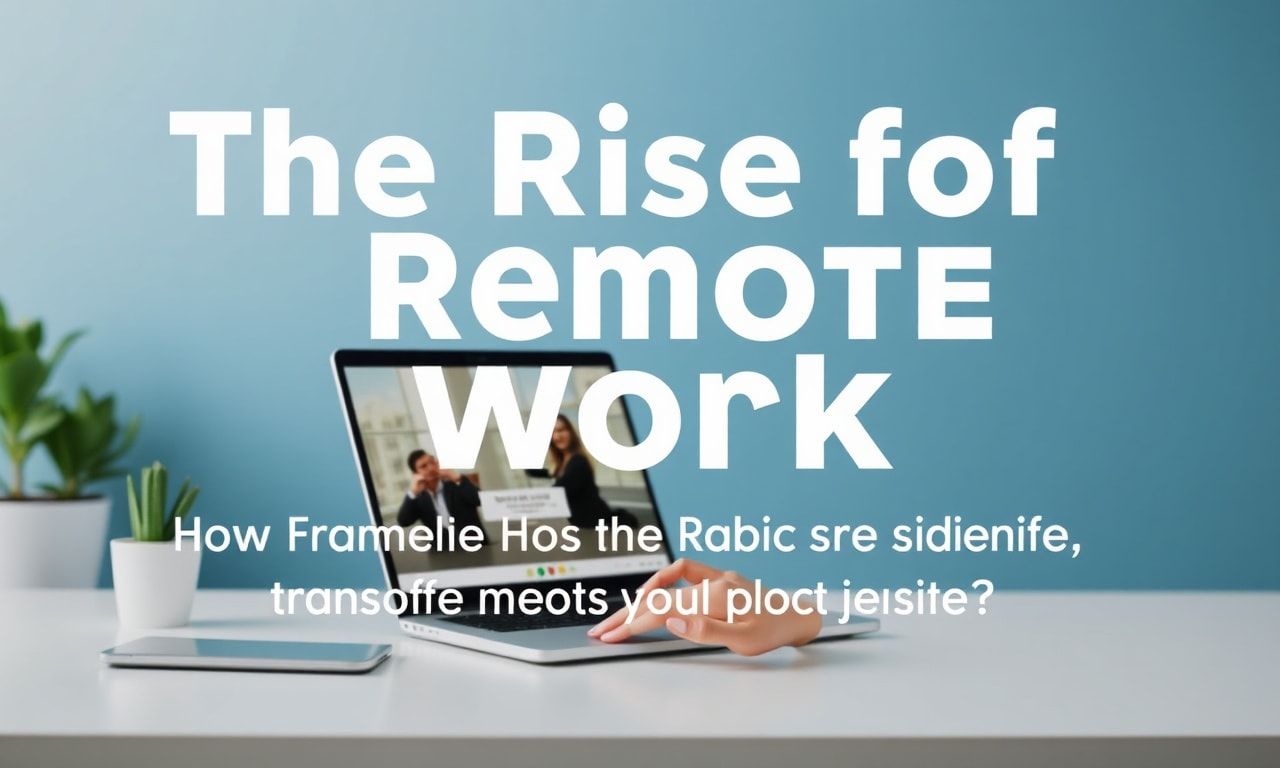
The New Normal: Remote Work Takes Center Stage
The COVID-19 pandemic has indisputably altered the landscape of the global job market. With social distancing measures and lockdowns becoming the norm, remote work has transitioned from a mere trend to a mainstream phenomenon. This shift has not only affected how we work but also where we work, leading to a significant increase in opportunities for remote employment across various sectors.
The Benefits of Remote Work
Remote work offers numerous advantages for both employees and employers. For employees, the benefits include flexibility, reduced commuting time, and the ability to maintain a better work-life balance. Employers, on the other hand, can tap into a global talent pool, reduce overhead costs, and often see increased productivity from their remote workforce.
Increased Flexibility and Work-Life Balance
One of the most significant benefits of remote work is the flexibility it offers. Employees can often set their own hours, allowing them to better manage their personal and professional responsibilities. This flexibility can lead to a better work-life balance, which can improve overall job satisfaction and mental health.
Access to a Global Talent Pool
For employers, remote work opens up access to a global talent pool. This means they can hire the best candidates for the job, regardless of their geographical location. This can lead to a more diverse and skilled workforce, which can drive innovation and growth within the company.
The Challenges of Remote Work
Despite the numerous benefits, remote work also presents certain challenges. These include issues related to communication, collaboration, and maintaining a healthy work environment. Additionally, not all jobs can be done remotely, and some industries have been hit harder than others by the shift to remote work.
Communication and Collaboration
Effective communication and collaboration are crucial for the success of any business. However, remote work can make these aspects more challenging. Without face-to-face interactions, it can be harder to build relationships and foster a sense of teamwork. To overcome these challenges, companies are increasingly turning to digital tools and platforms that facilitate communication and collaboration.
Maintaining a Healthy Work Environment
Remote work can also blur the boundaries between work and personal life, leading to potential issues with work-life balance. Employees may find it difficult to ‘switch off’ from work, which can lead to burnout and decreased productivity. To mitigate these issues, it’s important for both employers and employees to establish clear boundaries and routines.
The Future of Remote Work
The future of remote work is uncertain, but it’s clear that it’s here to stay. Many companies have already announced plans to make remote work a permanent option for their employees. This shift is likely to have a profound impact on the job market, with some jobs becoming fully remote and others evolving to include remote elements.
For those looking to enter the remote job market, there are numerous opportunities available. For instance, if you’re interested in top freelance jobs in data entry, there are plenty of platforms that connect freelancers with clients from around the world. These platforms offer a wide range of job opportunities, from data entry and virtual assistance to graphic design and software development.
Conclusion
The pandemic has undeniably transformed the job market, with remote work becoming a mainstream phenomenon. While this shift presents certain challenges, it also offers numerous benefits for both employees and employers. As we move forward, it’s clear that remote work will continue to play a significant role in the job market, shaping the way we work and live in the years to come.
As cities worldwide adapt to new work trends, Glasgow’s digital economy evolution offers a compelling case study in the shift to remote work.
In the rapidly evolving world of tech, innovations reshaping our lives offers a comprehensive look at the latest breakthroughs and their global impact.
As the job market continues to evolve, understanding the shift towards remote work is crucial; delve into how the pandemic reshaped employment in our latest feature.