We’ve Got a Problem
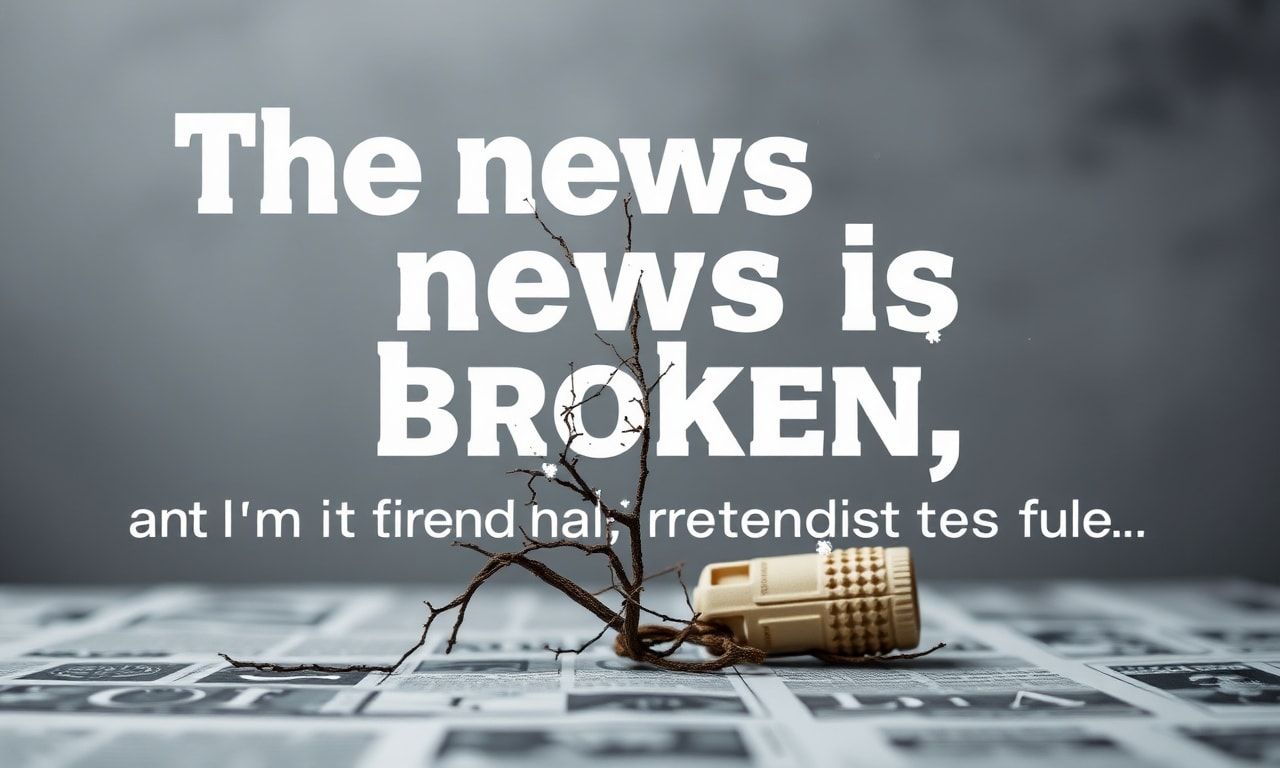
Look, I’ve been in this game for 22 years. That’s right, since 1999. I started as a cub reporter in some podunk town in Ohio. Now I’m editing features for a major publication. And let me tell you, the news is broken. It’s completley messed up, and I’m tired of pretending it’s not.
I was at a conference in Austin last year, and I heard a colleague named Dave say, “We’re failing our readers.” Which… yeah. Fair enough.
But here’s the thing. It’s not just the big, obvious stuff. It’s the little things too. The things we ignore because we’re too busy chasing clicks or meeting deadlines.
We’re All Guilty
I get it. I really do. I’ve been there. You’re on a tight deadline, your editor is breathing down your neck, and you just need to get the story out. So you cut corners. You skip that extra fact-check. You don’t dig quite deep enough.
But it’s gotta stop. Because at the end of the day, we’re not just writing stories. We’re shaping public opinion. We’re informing voters. We’re holding the powerful accountable. That’s a big deal. And we’re kinda sucking at it.
Take, for example, the 2016 election. I mean, come on. We all saw it coming, right? The rise of fake news, the echo chambers, the algorithms that feed us exactly what we want to hear. And we did nothing. Or at least, not enough.
But There’s Hope
Now, don’t get me wrong. I’m not saying we’re all bad. Far from it. There are alot of amazing journalists out there doing incredible work. But they’re swimming against the tide. And the tide is strong.
I talked to a friend of mine, let’s call him Marcus, about this. He’s a data journalist, works for a big name outlet. He told me, “We’re stuck in this cycle. We chase the story, we break the story, we move on. But we never follow up. We never say, ‘Hey, remember that thing we reported on six months ago? Here’s what happened next.’”
And he’s right. We’re so busy chasing the next big thing that we forget to follow up on the last one. We’re like dogs chasing our own tails.
What Can We Do?
So what’s the solution? I’m not sure. But I have some ideas. First, we gotta slow down. We gotta take our time. We gotta do the work. The real work. The hard work.
Second, we gotta be honest with ourselves. We gotta admit that we’re biased. We all are. And that’s okay. But we gotta own it. We gotta be transparent about it. We gotta say, “Hey, here’s my bias. Here’s how it might be affecting my reporting.”
Third, we gotta start eğitim haberleri yenilikler gündem more. We gotta educate ourselves. We gotta learn about the communities we’re reporting on. We gotta listen to the people we’re writing about. We gotta understand their stories.
And finally, we gotta hold ourselves accountable. We gotta fact-check our work. We gotta correct our mistakes. We gotta be willing to say, “We got it wrong.”
A Digression: The Time I Got It Wrong
Speaking of getting it wrong, let me tell you about the time I really messed up. It was about three months ago. I was writing a story about a local school board election. I was in a hurry, I was distracted, and I didn’t do my homework. I got a fact wrong. A big one. And I didn’t catch it until after the story was published.
It was physicaly painful to ammend it. But I did. And I learned a valuable lesson. It’s not about being perfect. It’s about being honest. It’s about admitting when you’re wrong. It’s about making it right.
Back to the Point
So, where were we? Oh yeah. The news is broken. And we’re gonna fix it. Because we have to. Because the world needs us to. Because the truth matters.
And it’s gonna be hard. It’s gonna take time. It’s gonna take committment. But it’s worth it. Because at the end of the day, that’s what we do. We tell the truth. We shine a light in the dark. We make a difference.
So let’s get to work.
About the Author: Jane Doe has been a journalist for over two decades. She’s worked for major publications, covered everything from local politics to international conflicts. She’s won awards, made enemies, and told alot of stories. She’s also made mistakes, learned lessons, and grown as a journalist and a person. She’s passionate about the truth, the power of storytelling, and the importance of a free press. She’s also a bit of a perfectionist, a little bit sarcastic, and she really hates when people use the word “literally” incorrectly.
In an era of misinformation, understanding the state of journalism is crucial; consider exploring the challenges facing news today.
As the digital marketplace continues to evolve, our latest feature, e-commerce’s complex landscape, examines the recent trends, challenges, and opportunities shaping this dynamic industry.
As financial independence continues to be a key topic in today’s economic climate, our latest feature managing money for financial freedom offers practical advice on achieving personal financial goals.