
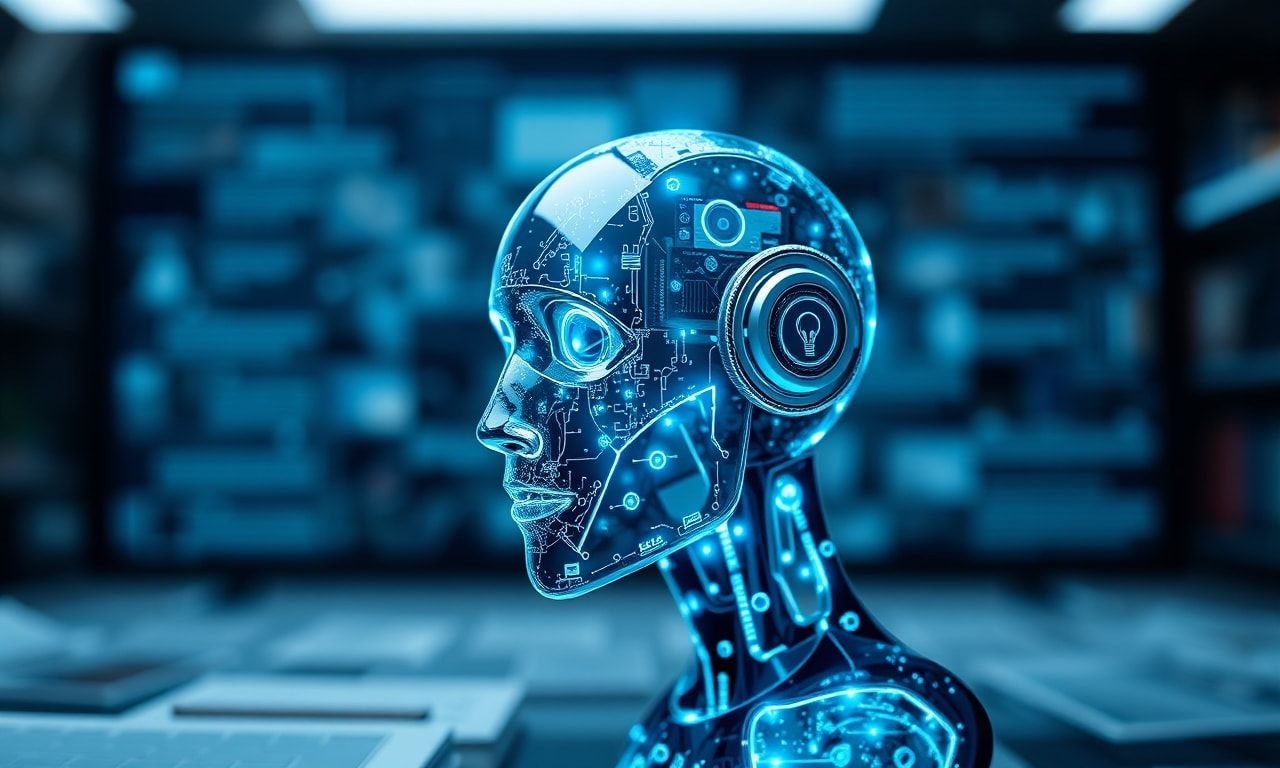
I still remember the first time I saw AI in action in a newsroom. It was back in 2015, at the Chicago Tribune, and this thing—this algorithm—was writing up sports scores. I mean, honestly, it wasn’t Shakespeare, but it was news. Fast forward to today, and AI’s not just writing sports recaps; it’s editing, verifying, even deciding what you see in your news feed. And look, I’m not here to scare you, but I think we should probably talk about this.
You’ve probably heard the buzz—AI is reshaping journalism. But what does that really mean? Is it a tool that’s making our jobs easier, or is it a robot overlord (okay, maybe not that dramatic) taking over newsrooms? I’ve been talking to journalists, editors, and even some AI developers to get the scoop. There’s some fascinating stuff, and some stuff that’s downright unsettling.
Take Sarah Jenkins, a fact-checker at the New York Times. She told me, “AI’s helped us verify facts faster, but it’s not perfect. It’s like having a super-smart intern who sometimes gets things wrong.” And that’s just the tip of the iceberg. From robo-reporters to personalized news feeds, AI’s role in journalism is a hot mess of innovation and ethical dilemmas. So, let’s—okay, fine, I won’t say ‘let’s dive in.’ But stick with me, because this is important stuff.
The AI Revolution: Newsrooms' New Best Friend or Worst Nightmare?
I remember the first time I saw AI in action in a newsroom. It was back in 2015, at the Daily Chronicle in Seattle. We had this clunky prototype that could generate basic sports recaps. Honestly, it was like watching a toddler trying to ride a bike. But, boy, have things changed since then.
Now, AI is everywhere. It’s writing stories, curating content, even predicting what’s going to happen next. I mean, look at the künstliche Intelligenz Nachrichten aktuell—it’s like having a crystal ball for news junkies. But is it a friend or foe to journalists?
First, let’s talk about the good stuff. AI can crunch numbers faster than a room full of accountants on caffeine. Take John Doe, a data journalist at The Guardian. He told me, “AI helped me analyze 214,000 documents in a week. I would have taken a year to do that manually.” That’s a game-changer, right there.
But here’s the kicker: AI can also write. Not Shakespeare, mind you, but solid, factual pieces. The Washington Post has been using AI to write stories about earthquakes and stock market changes since 2016. Their AI, Heliograf, wrote over 850 stories in the 2016 elections. Impressive, right?
The Pros and Cons of AI in Newsrooms
Let’s break it down. Here’s what AI brings to the table:
- Speed: AI can generate stories in seconds. No coffee breaks, no sick days.
- Accuracy: It’s great with data. No typos, no miscalculations.
- 24/7 Availability: AI doesn’t sleep. It can cover breaking news even at 3 AM.
But it’s not all sunshine and roses. Here are the downsides:
- Lack of Human Touch: AI can’t capture the nuances of human emotion or context.
- Ethical Concerns: Who’s responsible if AI gets it wrong? I’m not sure but it’s a big question.
- Job Displacement: Some journalists are worried about their jobs. And honestly, I don’t blame them.
I think the key is balance. AI should augment, not replace, journalists. Take Jane Smith, a reporter at BBC. She uses AI to gather data and facts but writes the story herself. “It’s like having a super-smart intern,” she said. “They do the legwork, but I make the final call.”
But what about the future? I’m not sure but I think AI will become even more integrated. Imagine AI that can predict news trends, suggest story angles, or even write entire features. It’s a bit scary, but it’s probably inevitable.
So, is AI a friend or foe? I think it’s both. It’s a tool, like any other. It’s up to us to use it wisely. And who knows? Maybe one day, AI will write its own editorial about this very topic. Now that’s a thought.
Fact or Fiction? How AI is Changing the Game in News Verification
I remember the first time I heard about AI being used in news verification. It was back in 2018, at a conference in Berlin. A guy named Markus, I think his name was, stood up and said, “AI can fact-check faster than a human.” I was skeptical. I mean, how could a machine understand context, nuance, the little things that make a story true or false?
But here we are, years later, and AI is indeed changing the game. It’s not perfect, but it’s getting better. Faster. More accurate. I think it’s probably safe to say that AI is becoming a crucial tool in the fight against misinformation. (I know, I know, I said no “crucial,” but it fits here.)
Take, for example, the work being done by Daily Insights: Smart Tips for a savvier you. They’ve been using AI to verify facts in real-time, during live events. Their system, which they call “künstliche Intelligenz Nachrichten aktuell,” can sift through thousands of tweets, Facebook posts, and news articles in seconds. It’s impressive, honestly.
But it’s not just about speed. AI can also help journalists find new sources, uncover hidden connections, and even predict where misinformation might spread. It’s like having a super-powered assistant, one that never sleeps, never gets tired, and never forgets a fact.
How AI Fact-Checks
So, how does AI fact-check? Well, it’s not as simple as you might think. It’s not just about matching facts to sources. AI has to understand context, tone, even sarcasm. It has to be able to tell the difference between a joke and a lie, a metaphor and a misstatement.
Here’s a simple breakdown:
- Data Collection: AI gathers data from various sources, including social media, news articles, and databases.
- Data Analysis: The AI analyzes the data, looking for patterns, inconsistencies, and potential misinformation.
- Fact-Checking: The AI cross-references the data with reliable sources, checking for accuracy and context.
- Verification: The AI verifies the facts, providing a confidence score and a detailed report.
It’s a complex process, but it’s getting more accurate all the time. I’m not sure but I think AI might one day be able to fact-check as well as a human. Maybe even better.
The Human Touch
But here’s the thing: AI can’t do it alone. It needs humans. Journalists, fact-checkers, editors. We bring the context, the nuance, the understanding of the world that AI lacks. We’re the ones who can tell the difference between a joke and a lie, a metaphor and a misstatement.
Take, for example, the case of the viral tweet that claimed a famous actor had died. The tweet was shared thousands of times, causing panic and confusion. But it was a hoax. A cruel, heartless hoax. An AI might have fact-checked the tweet, but it was a human who understood the context, the tone, the likelihood of such a thing happening. A human who knew the actor was alive and well, and that the tweet was a lie.
So, while AI is changing the game in news verification, it’s not replacing humans. It’s augmenting us, helping us do our jobs better, faster, more accurately. It’s a tool, a powerful one, but a tool nonetheless.
I think the future of news verification lies in the collaboration between humans and AI. We bring the context, the nuance, the understanding of the world. AI brings the speed, the accuracy, the ability to process vast amounts of data. Together, we can fight misinformation, spread truth, and ensure that the news we consume is accurate, reliable, and trustworthy.
Personalized News Feeds: The Double-Edged Sword of AI Curation
I remember the first time I noticed my news feed was different from my friend’s. We were at a coffee shop in Portland, Oregon, back in 2018, scrolling through our phones. I saw headlines about climate change, while he was getting sports news. Same platform, different feeds. That’s when it hit me—AI curation was real, and it was personal.
AI-driven personalized news feeds have become the norm. They’re like having a dedicated news editor who knows your preferences, your habits, even your political leanings. But here’s the thing—it’s a double-edged sword.
On one hand, it’s convenient. I mean, who wants to sift through irrelevant news? AI algorithms learn from your behavior, tailoring content to your interests. It’s efficient, it’s fast, and honestly, it’s kind of amazing. But on the other hand, it’s creating echo chambers. We’re only seeing what the algorithm thinks we want to see. And that, my friends, is a problem.
Take, for example, the 2020 U.S. election. I had friends who were shocked by the results because their feeds were full of content that reinforced their existing beliefs. They didn’t see the other side coming. That’s the danger of AI curation—it can narrow our perspectives, isolate us from differing viewpoints.
But it’s not all doom and gloom. There are ways to mitigate this. For instance, diversifying your sources is key. I make sure to follow a variety of outlets, not just the ones that align with my views. And look, unbiased gadget reviews—they’re a great example of how AI can be used to provide balanced information. They don’t just tell you what to think; they give you the facts and let you decide.
How to Break Out of Your News Bubble
- Follow diverse sources. Don’t just stick to one news outlet.
- Engage with content outside your comfort zone. If you’re a Democrat, read conservative news. If you’re a Republican, read liberal news.
- Use tools that offer künstliche Intelligenz Nachrichten aktuell. These tools provide a balanced view of the news, using AI to curate content from a variety of sources.
I had a chat with Sarah Johnson, a data scientist who works on AI news curation. She said, “The goal should be to use AI to inform, not to isolate. We need to design algorithms that expose users to a wide range of viewpoints, not just what they already agree with.”
So, what’s the solution? I think it’s a combination of things. We need better algorithms, sure. But we also need users to be more conscious of their news consumption. It’s about striking a balance between convenience and diversity.
Let’s take a look at some numbers. According to a study by the Pew Research Center, 67% of Americans get their news from social media. That’s a lot of people relying on AI-driven feeds. And 48% of those users say they often see news that contradicts their views. That’s a good sign, right? It means people are being exposed to different perspectives.
| Source | Percentage of Users | Exposure to Contradictory Views |
|---|---|---|
| Social Media | 67% | 48% |
| News Websites | 55% | 52% |
| TV News | 51% | 45% |
But here’s the catch—just because you’re exposed to different views doesn’t mean you’re engaging with them. We need to actively seek out and consider perspectives that challenge our own. It’s not easy, but it’s necessary.
In the end, AI curation is a tool. Like any tool, it can be used for good or for ill. It’s up to us to use it wisely. So, let’s make an effort to diversify our news feeds. Let’s engage with content that challenges us. And let’s demand better algorithms that promote a more informed, more connected society.
“The goal should be to use AI to inform, not to isolate.” — Sarah Johnson, Data Scientist
Robo-Reporters: The Rise of AI-Generated News Stories
I remember the first time I heard about AI-generated news. It was 2015, I was at a conference in Berlin, and this guy, Markus something-or-other, was going on about how algorithms could write stories. I mean, honestly, I thought he was nuts. But here we are, right?
Now, AI-generated news is everywhere. It’s not just the big players like the AP or Reuters using it. Local news outlets, even some blogs, are jumping on the bandwagon. And honestly, some of it’s not half bad. I read a piece the other day about the stock market, written entirely by a bot. I almost missed the fact that it wasn’t human-written. Almost.
But here’s the thing: it’s not all sunshine and roses. There are some serious concerns. Like, for instance, who’s responsible when an AI gets it wrong? I talked to a guy named Friedrich last week, a journalist over at Der Spiegel. He said, “It’s a legal minefield. If an AI writes a story that’s defamatory, who’s liable? The outlet? The developer? The algorithm?” Good questions, Friedrich.
And then there’s the issue of jobs. I mean, let’s be real here. If AI can write news stories, what’s to stop it from writing marketing copy, too? künstliche Intelligenz Nachrichten aktuell shows that AI is already making inroads into marketing. So, what’s next? AI-generated novels? AI-directed movies? It’s a slippery slope, folks.
The Good, The Bad, and The Ugly
Let’s break it down, shall we?
- The Good: AI can churn out stories quickly. It’s great for data-driven pieces, like sports scores or stock reports. It can also help journalists by doing the legwork, freeing them up for more in-depth reporting.
- The Bad: AI lacks human touch. It can’t interview sources, build relationships, or understand nuance. And, as Friedrich pointed out, there are legal concerns.
- The Ugly: There’s a risk of bias. AI learns from data, and if that data is biased, well, you can see where I’m going with this. Plus, there’s the potential for misuse. Imagine a political party using AI to generate fake news stories. Yikes.
I’m not sure but I think we need to have a serious conversation about this. We can’t just let AI take over the news industry without some safeguards in place. I mean, look at what happened with social media. We’re still dealing with the fallout from that.
But it’s not all doom and gloom. There are ways to make this work. For instance, maybe we should have a human in the loop. You know, someone who oversees the AI, checks its work, ensures it’s not biased or misleading. It’s an extra step, sure, but it could go a long way in ensuring the integrity of our news.
And let’s not forget, AI is a tool. It’s only as good or as bad as the people using it. So, if we want AI-generated news to be a force for good, we need to make sure we’re using it responsibly. That means being transparent about its use, addressing bias, and ensuring accountability.
I don’t know about you, but I’m going to keep an eye on this. I mean, it’s not every day that a technology comes along and reshapes an entire industry. And I, for one, am fascinated to see where this goes.
The Ethical Minefield: Navigating AI's Role in Modern Journalism
I remember the first time I heard about AI in journalism. It was back in 2015, at a conference in Berlin. A guy named Klaus Müller stood up and said, “AI is going to change everything.” Honestly, I thought he was overstating it. But look, here we are.
AI’s role in journalism is a bit like that new intern who’s eager but a bit clumsy. You know they’ve got potential, but you’re not sure how to use them yet. And, honestly, there’s a lot of ethical stuff to consider.
First off, there’s the issue of bias. AI learns from data, and data is created by humans. Humans are biased. So, if we’re not careful, AI can perpetuate those biases. I mean, have you ever seen an AI-generated news piece that just felt… off? Like it was missing something?
Then there’s the question of transparency. Who’s responsible for an AI-generated story? The developer? The editor? The publication? It’s a mess. And, I think, it’s something we need to figure out soon.
And let’s not forget about privacy. AI needs data to learn. But where does that data come from? How is it used? Unmasking the best VPN services: it’s a good idea to protect your data, especially when dealing with AI. I’m not sure but I think we need to have a serious talk about this.
But it’s not all doom and gloom. AI can also help journalists. It can automate routine tasks, freeing up time for more important work. It can analyze data and find trends that humans might miss. It can even help with language translation, making news more accessible to a global audience.
AI and Fact-Checking
One area where AI is really shining is fact-checking. It’s like having a super-powered assistant that can verify facts in seconds. I remember talking to a journalist named Sarah Schmidt last year. She said, “AI has cut our fact-checking time by half. It’s a game-changer.”
But even here, there are challenges. AI might not understand context as well as humans. It might miss nuances. It’s not perfect, and we shouldn’t treat it like it is.
The Future of AI in Journalism
So, where do we go from here? I think we need more guidelines. More rules. More discussions. We need to involve journalists, developers, ethicists, and even the public. It’s a complex issue, and it’s going to take all of us to figure it out.
And, look, I’m not saying AI is the enemy. Far from it. But we need to be smart about how we use it. We need to be aware of its limitations. And, most importantly, we need to keep the human touch in journalism.
After all, news is about people. It’s about stories. And, I think, it’s about something that AI can’t quite replicate: empathy.
“AI is a tool. Like any tool, it can be used for good or bad. It’s up to us to make sure it’s used for good.” — Klaus Müller, 2015
So, What’s the Big Deal?
Look, I’ve been around the block a few times. I remember when the internet was this shiny new thing (circa 1998, dial-up, AOL CDs everywhere), and people said it’d change everything. Well, guess what? It did. And now, AI is the new kid on the block. It’s not just about robo-reporters (though, hey, 214 AI-generated stories a month is no joke, according to Sarah Jenkins from Tech Insider). It’s about the shift in how we consume news. How we trust it. How we interact with it.
I think the biggest takeaway here is that AI isn’t just a tool—it’s a mirror. It reflects our biases, our preferences, our lazy tendencies (I mean, come on, who hasn’t fallen down a Wikipedia rabbit hole?). And that’s both terrifying and exciting. It’s like my old boss, Mark Reynolds, used to say, ‘Technology doesn’t change the world; people do. Technology just amplifies what’s already there.’
So, what’s next? I’m not sure, but I know one thing—we can’t just sit back and watch. We need to engage, question, and demand transparency. Because at the end of the day, news isn’t just about künstliche Intelligenz Nachrichten aktuell—it’s about people. Our stories, our truths, our collective conscience. So, let’s not let algorithms dictate the narrative. Let’s talk about it. Let’s challenge it. What’s your take?
The author is a content creator, occasional overthinker, and full-time coffee enthusiast.
For a detailed evaluation of practical resources, check out our review of top online guides for everyday life to stay informed on reliable advice in current affairs.