
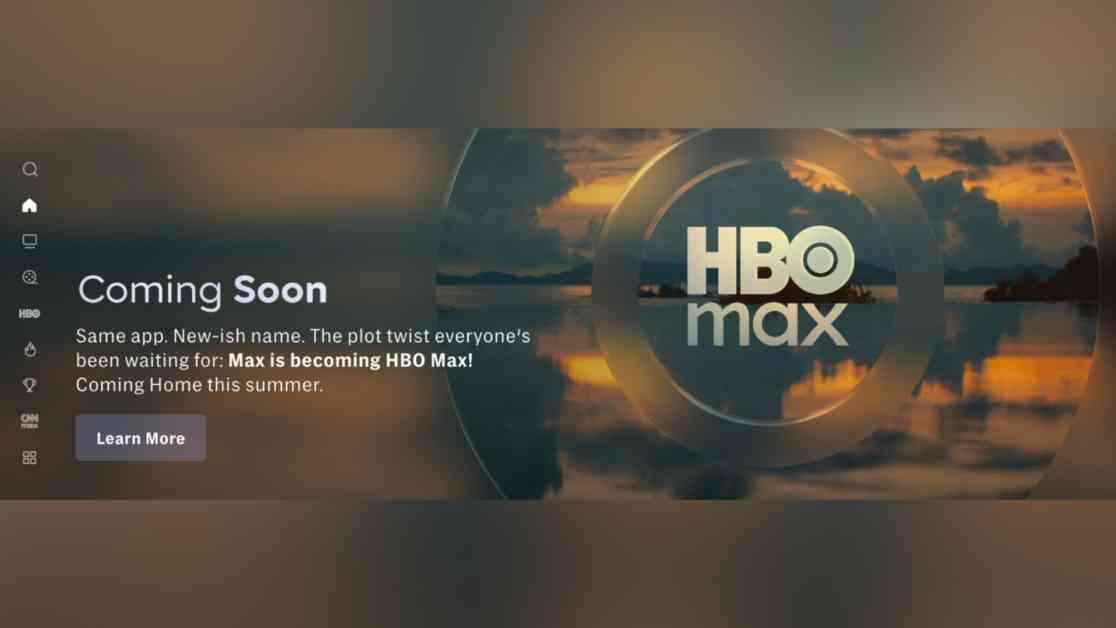
In a shocking twist in the ongoing battle of the streaming services, Warner Bros. Discovery has dropped the ‘Max’ and decided to go back to the more well-known and esteemed ‘HBO Max’ name. This change comes merely a year after the initial rebrand aimed to make the service more diverse beyond just high-end TV shows. Analysts are seeing this move as a clear acknowledgment of the influence and endurance of the HBO brand.
Why Warner Bros. Discovery Is Reverting to ‘HBO Max’
The original rebrand to ‘Max’ in 2023 was intended to showcase a wider range of content, including shows from Discovery, TLC, and HGTV. However, the shift caused confusion and diluted HBO’s reputation for top-notch programming. During Warner Bros. Discovery’s 2025 Upfront event, it was announced that the company would bring back the HBO Max name to reclaim its premium status. HBO chief Casey Bloys stated that the return to HBO Max “better represents” what the platform offers, while CEO David Zaslav emphasized HBO’s global appeal and history of delivering quality content.
“With the path we’re on and the strong momentum we’re experiencing, we believe HBO Max much better represents our current consumer offering,” said Bloys. “It clearly states our implicit promise to provide content that is recognized as unique and, to borrow a phrase we always said at HBO, is worth paying for.”
Netflix CEO Sarandos Weighs In
Netflix co-CEO Ted Sarandos reacted quickly to the news, describing Warner Bros. Discovery’s decision as a sensible adjustment. Speaking following Netflix’s 2025 Upfront presentation, Sarandos commented: “They had so many years trying to start with so many different brands that this move makes sense.” Sarandos highlighted the importance of brand consistency, noting that Netflix’s strength lies in its singular identity, unlike WBD’s various legacy transitions. He also questioned the original choice to remove ‘HBO’ from the platform name, pointing out the enduring appeal of the brand.
Industry Reactions: From Criticism to Memes
The decision to switch back to HBO Max has sparked varied reactions across the media landscape. Many industry observers viewed the rebrand as an admission that the initial name change was a misstep. The Verge labeled the initial shift as “an all-time bad rebrand,” citing the confusion it caused among consumers and the devaluation of HBO’s iconic identity. Meanwhile, social media was flooded with sarcastic comments. HBO Max’s official accounts joined in the fun, sharing tongue-in-cheek memes, including one from Euphoria captioned: “B*tch, you better be joking.”
Warner Bros. Discovery’s Q1 Results: Mixed Signals
In its most recent earnings report, Warner Bros. Discovery reported a net loss of £338.53 million ($449 million) for Q1 2025, showing improvement compared to the £720.05 million ($955 million) loss in the same period last year. However, total revenue decreased by 10% year-over-year to £6.77 billion ($8.98 billion), falling short of analyst predictions. The studio division experienced an 18% revenue decline to £1.74 billion ($2.31 billion) due to the lack of major box office hits. Television networks like CNN and Discovery Channel saw a 7% revenue decrease to £3.62 billion ($4.8 billion) due to declining linear TV viewership.
On the flip side, the streaming segment showed strong growth:
– 5.3 million new subscribers, bringing the total to 122.3 million
– 8% revenue growth to £2.01 billion ($2.66 billion), driven by popular shows like The White Lotus Season 3 and gains in overseas markets.
Betting on Brand Power to Boost Streaming
The decision to revert to the HBO Max name signals a strategic shift in Warner Bros. Discovery’s attempt to strengthen its position in the competitive streaming landscape. Amid financial challenges, the company is doubling down on the brand recognition and quality that once set HBO apart in the industry. With established brands facing extinction and market leaders consolidating power, WBD is hoping that ‘HBO Max’ will stand out and indicate a renewed focus on premium content—a move that, for now, both analysts and competitors seem to agree is a worthwhile reversal.